In Toi Ora’s 30th year, we caught up with an alumni artist, Sam RB, who attended Toi Ora from 2000 – 2010.
Sam has kept up a consistent creative practice, which has led him to places such as the London Olympics, but more importantly, it has guided him on his path to get to know himself, and make sense of the world.
What were your highlights of your time at Toi Ora?
I’ve always felt very supported by Toi Ora, so there are many highlights – for example, that first exhibition that I’d never imagined possible. But for me, the highlights are also the moments with people that I remember fondly: conversations in the writing class, or over coffee. People’s kindness would be the biggest thing I remember – Judy, Gabe, Erwin, Greg, Charlton, Tricia, etc.
I find the world can be a rather hostile place. People are quick to label and ‘other’ us, and that can be very dehumanising and unpleasant. So I really enjoyed the sense of belonging at Toi Ora, and how I wasn’t pathologised to fit into someone else’s ignorance and lack of awareness. I was allowed to be ‘who I is’. But actually, it was more than that – there was space for me to just be. Because, to be fair, I was some distance from knowing myself, and my own ignorance and awareness were in a dance of their own.
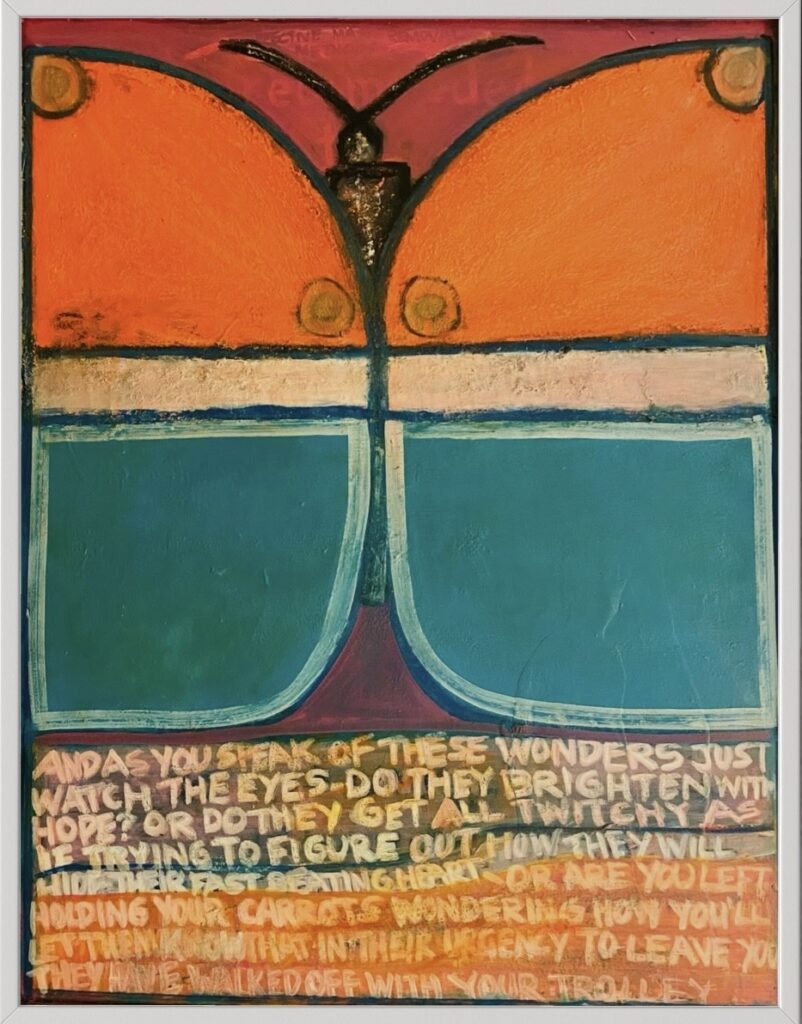
How does practising creativity support your mental health and wellbeing?
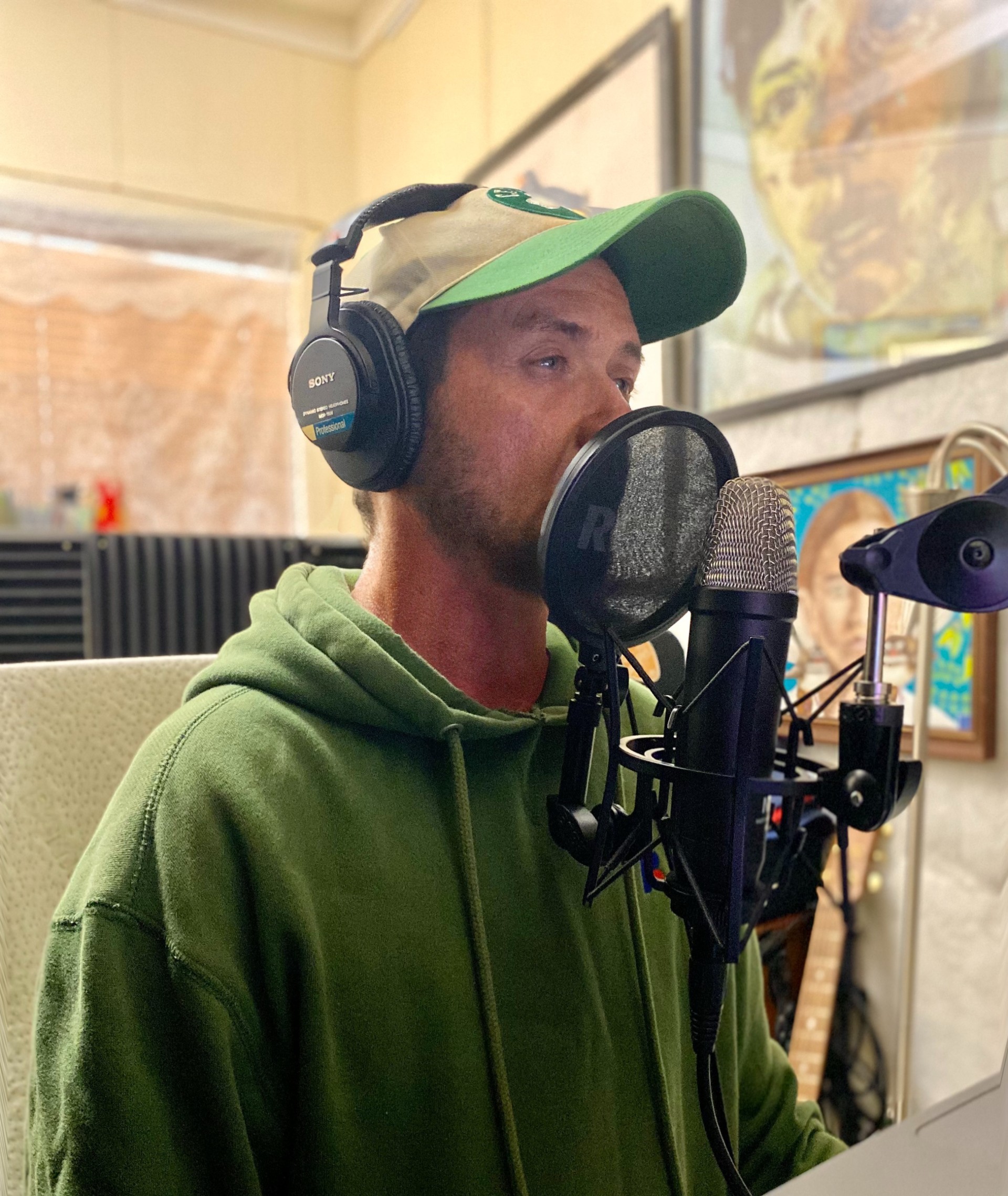
As I’ve gotten older, I’ve realised that creativity is a most wonderful tool – for everyone. In the past, I felt like I fell into creative projects by accident or desperation, but now it is an active daily focus. Over the last fifteen years I’ve created a home studio – which sounds much flashier than it is. It’s a room with a corner for recording, surrounded by acoustic foam, a computer and recording gear. There’s another corner for painting, and a lot of chaos in between! I was undiagnosed ADHD up until late 2022, so that chaos is looking slightly more organised now… perhaps.
In terms of mental health and wellbeing, creativity is my life now. If anything, there aren’t enough hours in a day to do all the writing, painting, and recording I need to do. It’s a very good place to be, and I know I’m very fortunate. The ADHD diagnosis has played a significant part in making this possible, and I’m extremely grateful to those who helped make that happen. It’s one thing to be a creative person; it’s an entirely different experience to have those creative ideas and expressions land in order, so you can actually navigate and work with them. Not always, and never perfectly – but far, far more than before.
Creativity has always supported my mental health. First, it was a pause button, a place of respite, a moment to collect myself and start again. Then it became a way of life, an attempt to contribute and to some degree meet expectations of what I thought I was supposed to be and do. And now it is, well… everything. Like breathing and walking. Just being.
I saw on your website and blog that you explore topics such as invisibility, your personal journey transitioning as a 54-year-old (no small feat I’m sure), and other subjects personal to you – how does incorporating your experiences into art help you?
I personally use creativity to move out of invisibility, because that’s what discrimination and bigotry do: they make us invisible, or at least people project invisibility onto us. I believe our creativity can undo the impact of those projections.
All of this really landed for me after my ADHD diagnosis. I was able to have thoughts in order and with pause. So two very big jigsaw pieces fell into place, and I began transitioning. Transitioning itself has been fairly straightforward and wonderful; the difficulties have tended to come from people’s ignorance, bigotry, and other forms of transphobia, often from people you least expect it. So you get very practiced at being blindsided.
So to answer at least one question more directly: my art is the boat I travel on. It allows me to undo the tension and tightness of difficult experiences, and to wade in the humanity of it all. A friend once shared a metaphor about travelling to the ocean floor each time and sitting with the pain, before eventually pushing back up to the surface. It’s a metaphor I resonate with deeply. Perhaps my ‘boat’ has an anchor and waits above me while I sit on that ocean floor for as long as the ’unfolding’ needs. For me, that’s one of the things that distress does – it guides me closer each time to opening into something humane and real, a greater understanding and appreciation of ‘who I is’, and perhaps even why I’m here.
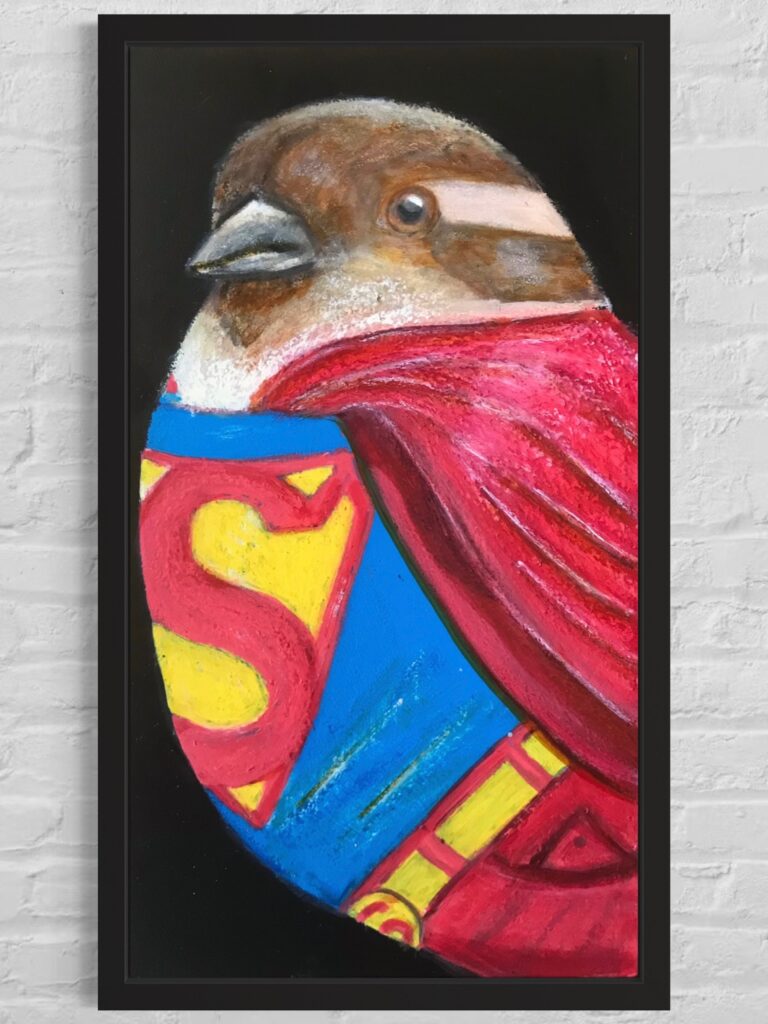
Have you always had interest in creativity and the arts? Tell us about your new single going to come out in February?
As a kid I was drawn to the guitar and ‘borrowed’ one that I hid in a wardrobe (I’m actually writing a song about that!). I taught myself how to play, and when I was about ten I remember the first time I could play a bar chord. I felt a sense of mastery, filled with awe and wonderful curiosity – and of course I thought I was pretty cool for nailing it.
I’ve always sung; I think I had vibrato as a five-year-old, which is kind of weird, eh. Now my voice is an octave deeper and I love it, and I’m basically learning how to sing again. My brain still confuses what I hear with the sounds I can (and can’t) make as my vocal cords go through a second puberty – this time from testosterone.
Over the years music has mostly been an act of desperation, a way to make sense of experiences and distress that had no words but somehow fell easily into lyrics. More recently, though, music has become much more, but I’m not sure how to articulate it. Maybe it’s like breathing. I just find myself enjoying the writing, recording, and editing tracks right now. It all feels kinda fabulous, and I’m so very grateful (especially to my partner) that I can.
The song coming out soon, 1971 Transam, is one I started writing in 2023. It has come together over time. While it’s the first song I’ll release with my new (lower) voice, it also ends with my first (higher) voice. So it’s a nod in both directions – to my past and my present/future – and it expresses gratitude to the role my past played in getting me to ‘here’, while acknowledging the difficult path to ‘just being me’.
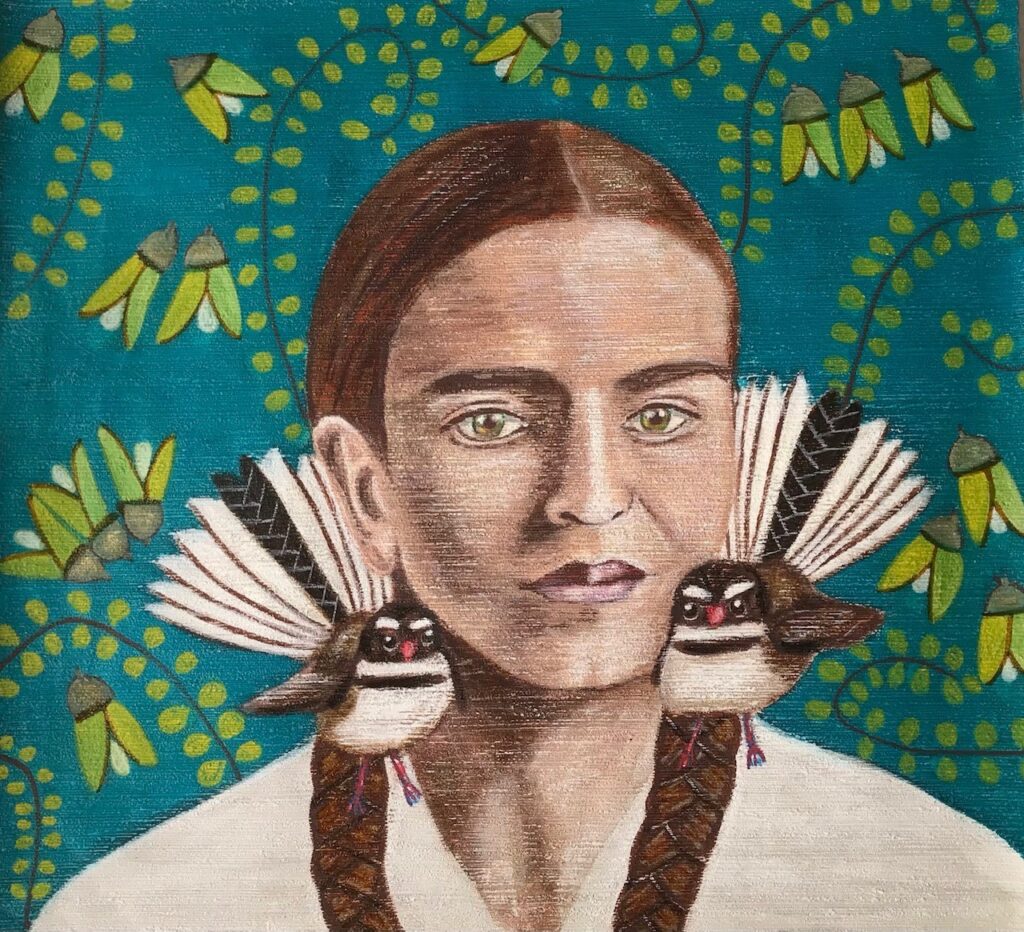
What advice would you have for anyone wanting to start a creative practice to enhance their wellbeing?
Oh, that’s a wonderful question, and I feel like I should know the answer, but I’m not sure I do. Off the top of my head, I’d say the most important advice I give myself is: just start. Especially for us ADHDers and also PTSDers, starting can be the maunga before the maunga. That in itself is a journey.
Letting yourself be wonky and imperfect. Being ok with being uncomfortable in not always knowing what you’re doing and potentially failing – but remembering that some of our most amazing work comes out of what once felt like an epic fail. Or maybe even worse, and more triggering: creating something wonderful.
Is there anything you would like to add?
Yes. I want to say a massive thank you to Toi Ora, to all the people that I have met there over the years, and those I am yet to meet. You are a whānau for so many of us – a place of respite, respect, and dignity. There were years when my personal overwhelm, dissociation, and distance from myself left my gratitude fragmented and badly articulated, if at all. So I just want to take this opportunity to say a heartfelt and heart-full thanks to you all for walking alongside me over the years.
I feel like I’ve travelled vast distances over the last twenty-five years, but when I look back more closely, the path appears more circular than linear. Along the way there were times when others joined me and walked beside me for a bit. I’d like to think that I could do that for someone else now.
Check out Sam’s website here: www.samrb.com | www.facebook.com/samrbnz